
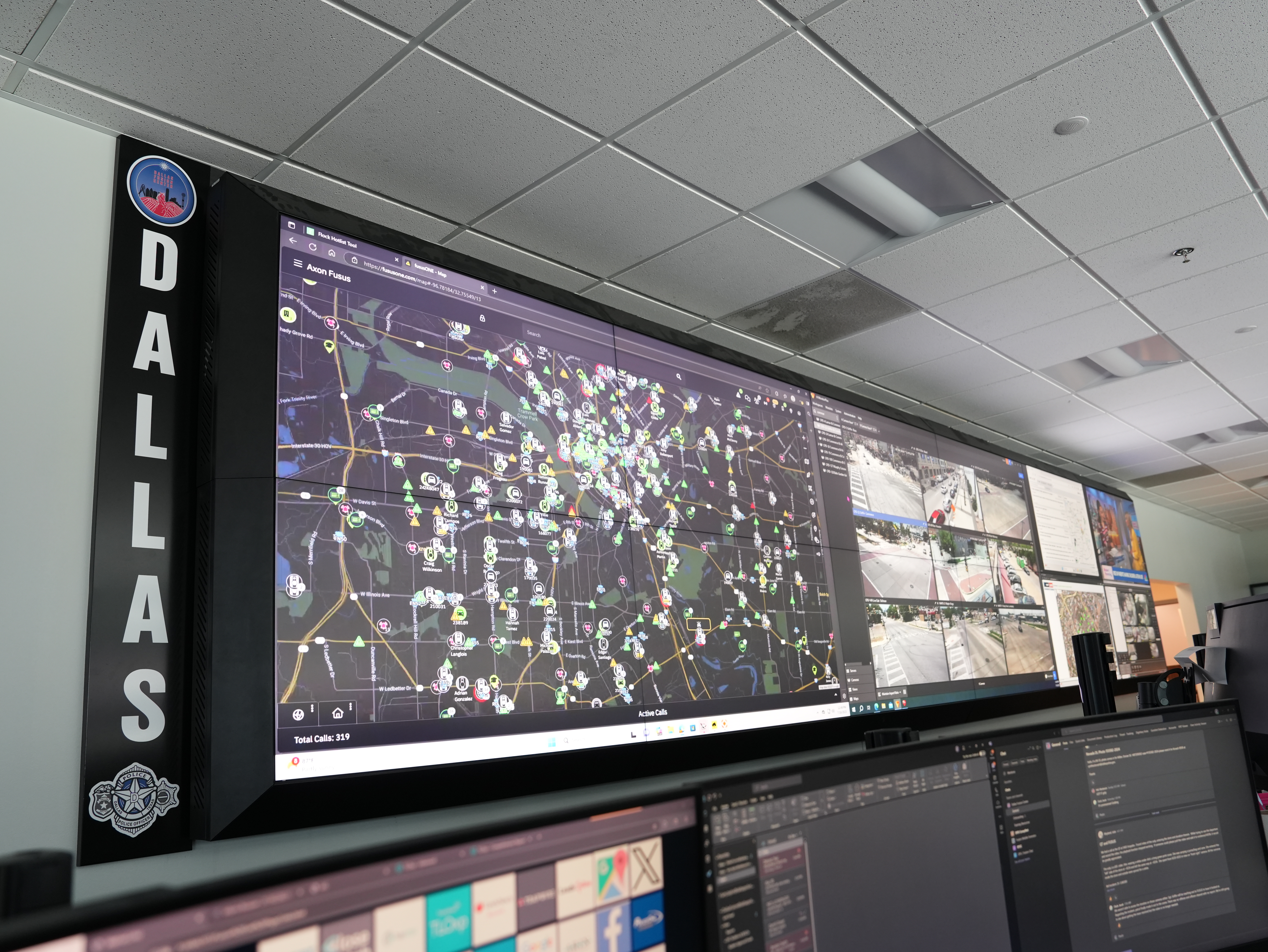
This report was written by TechHalo based on a written Q&A with Major Brian Lamberson of the Dallas Police Department’s Intelligence Division in Texas. The header image was provided directly by the department for official use.
What technology and vendor(s) power the program?
Clearview AI
What kind of training was required to get started, and who provided it?
All qualified analysts and detectives attended a four-day training on facial comparison hosted by experts from the Federal Bureau of Investigation. Additionally, they completed a one-hour virtual course on implicit bias. Finally, they received one hour of training from the company, Clearview AI.
What impact have you seen so far—any results, success stories, or data you can share?
The leads generated by our analysts and detectives have led to multiple arrests for violent offenses—five that are confirmed, with likely more.
What benefits has the program brought to the department or community (e.g., time savings, officer safety, transparency)?
The program can dramatically speed up the investigation of a violent offense.
What internal challenges or pain points does the program help address?
Prior to implementing the program, the department relied solely on community involvement to identify suspects in photographs. This technology speeds up that process while still working in conjunction with the community to remove violent offenders.
What was the biggest challenge in launching the program? Any lessons for other agencies?
One of our biggest challenges was gaining community buy-in. Being transparent and holding multiple meetings with community members helped tremendously.
How was the program funded (grants, internal budget, partnerships)?
The program was funded using UASI grant money.
What prompted the department to implement facial recognition in the first place?
The department often had clear photographs of suspects committing crimes but no quick way to identify them. This technology helps remedy that issue.
What policies or restrictions guide its use?
The program may only be used in specific circumstances, including:
-
Identifying suspects or persons of interest in active or ongoing investigations involving offenses such as murder, rape, robbery, aggravated assault, arson, human trafficking, kidnapping, terrorism, and sexual offenses.
-
Identifying individuals who lack the capacity to identify themselves, including those who are incapacitated, deceased, or otherwise at risk.
-
Identifying missing persons.
-
Situations involving reasonable suspicion that an identifiable individual has committed or is planning criminal activity that presents a threat to individuals or public safety (e.g., to prevent a terrorism plot).
The system does not constitute probable cause and only generates investigative leads. All uses must be approved by a supervisor, and each request is reviewed by a minimum of two analysts or detectives.
Who is responsible for reviewing and verifying system matches?
Qualified analysts and detectives assigned to the Fusion Center.
How is the department addressing privacy concerns?
By strictly limiting the types of offenses and circumstances in which the technology can be used.
What lessons have you learned since the program began?
We’ve learned that the quality of the photograph plays a major role in successful identification.
What are your goals or next steps for the program?
We plan to reevaluate the program to identify where we’ve seen the most success and determine areas for improvement.
Program Update Notice
This Tried + Tested post reflects verified details as of July 2025. Program results and tech use may shift over time. While we spotlight major updates when they happen, older posts aren’t monitored continuously.

Stay Informed
The Monthly Tech Brief
Subscribe for updates on upcoming technology events, Tried & Tested reports, and subscriber-only content. Delivered in a monthly briefing to your inbox.